
Fundraising Insight: How Fractional Fundraising Works - What Small Nonprofits Can Expect
Nonprofits need strong fundraising leadership, but hiring a full-time fundraiser isn't always an option.Fractional fundraising provides expert guidance, hands-on implementation, and strategic direction without the full-time cost—combining senior-level expertise with flexible support designed specifically for small organizations with limited capacity.
If you're wondering how this partnership actually works in practice, you're not alone. Many Executive Directors know they need professional fundraising support but worry about integration, cost, and whether an outside partner can truly represent their mission. Let's pull back the curtain and show you exactly what to expect.
What Is Fractional Fundraising and How Does It Work?
Fractional fundraising is a flexible fundraising solution where experienced fundraising professionals work with your nonprofit on a part-time basis, providing senior-level expertise at a fraction of the cost of a full-time hire.
Unlike traditional consultants who create strategies and disappear, fractional fundraisers become integrated members of your team. We don't just advise—we execute. From strategic planning to donor stewardship to grant writing, we handle the fundraising activities that keep falling to the bottom of your to-do list.

Here's what makes fractional fundraising different:
Strategic direction tailored to your mission and capacity
Clear planning with realistic timelines and measurable objectives
Consistent implementation of fundraising activities without supervision burden
Ongoing optimization as your organization grows
The model is simple: You get dedicated fundraising hours each month (think part-time) from an experienced professional who knows your organization, your donors, and your goals—without paying for benefits, office space, or recruitment costs.
How Fractional Fundraising Differs from Traditional Consulting
Here's what really concerns me about traditional fundraising consulting: you get a beautiful strategic plan and then you're on your own to implement it. But when you're already wearing all the hats, another to-do list isn't the answer.
Traditional Consulting vs. Fractional Fundraising

Traditional Consultants:
Provide recommendations and strategic plans
Limited engagement (often 3-6 months)
Implementation falls entirely on your team
Requires internal capacity to execute
One-time cost, but no ongoing support

Fractional Fundraising:
Provides strategy AND hands-on execution
Long-term partnership (typically 12+ months)
Takes fundraising tasks completely off your plate
Builds sustainable systems while executing
Monthly retainer with senior-level expertise
The difference? We don't just tell you what to do—we do it with you. We integrate seamlessly with your staff and board, train your team, and ensure consistent execution of fundraising activities month after month.
It's about adding taking fundraising off your workload entirely, while building capacity that lasts beyond our partnership.
What to Expect: The Fractional Fundraising Process
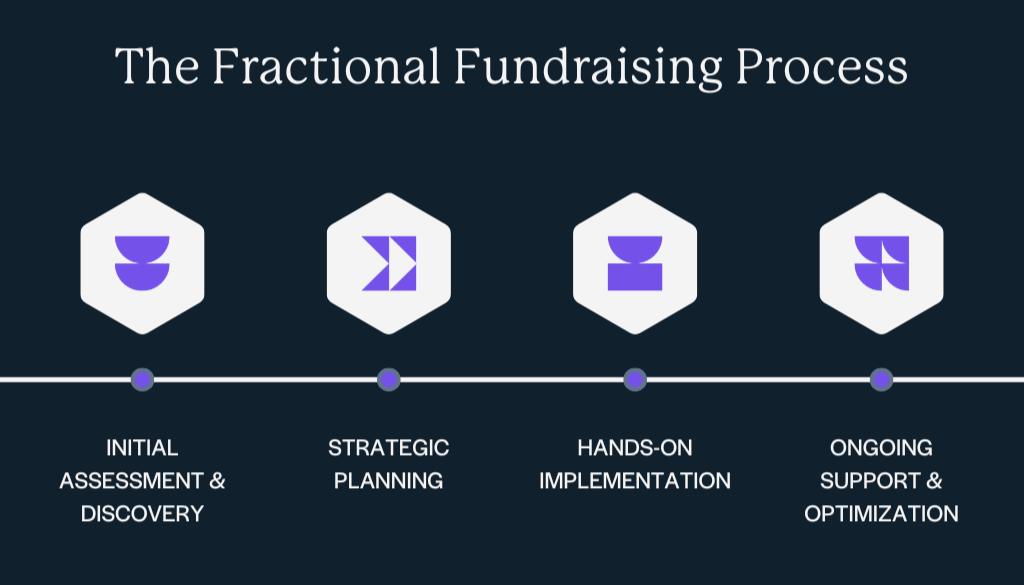
When you partner with a fractional fundraiser, you gain both fundraising leadership and hands-on support to move your nonprofit forward. Here's exactly what the process looks like from discovery call to sustained growth:
Phase 1: Initial Assessment & Discovery
First, we take a deep dive into your current fundraising reality—not just your activities, but your capacity, systems, and donor relationships.
What we analyze:
Current fundraising systems and donor database
Revenue streams and giving patterns
Staff capacity and board engagement
Donor communication and stewardship practices
Fundraising materials and messaging
Why this matters: We can't build a sustainable plan without understanding where you're starting from. This comprehensive discovery ensures we're not giving you strategies that sound good on paper but don't fit your actual capacity.
Phase 2: Strategic Planning
Your fractional fundraiser develops a customized fundraising plan that aligns with your mission, matches your current resources, and focuses on high-impactstrategies.
Your strategic plan includes:
Clear revenue goals broken down by source
Specific fundraising initiatives with timelines
Donor segmentation and cultivation strategies
Communication calendar and key touchpoints
Measurable objectives to track progress
This isn't a binder that sits on your shelf. This is a working document that guides our weekly activitiesand evolves as your organization grows.
Phase 3: Hands-On Implementation (Ongoing)
Here's where fractional fundraising shows its value. We don't just make recommendations—we lead initiatives, execute campaigns, and handle the day-to-day fundraising activities that require consistency. We wrote a blog post about what fractional fundraising looks like day-to-day.

What hands-on implementation looks like:
Writing and submitting grant applications
Creating donor communications and appeal letters
Managing donor database and tracking systems
Coordinating fundraising campaigns
Stewarding major donors with personalized outreach
Training staff and board members on fundraising best practices
Building sustainable systems for long-term efficiency
Your role? Provide organizational context, make final decisions on strategy, and focus on your mission work. Our role? Everything else related to fundraising.
Phase 4: Ongoing Support & Optimization (Continuous)
Fundraising isn't "set it and forget it." We continuously monitor progress, adjust strategies based on what's working, and provide expert guidance to ensure your fundraising success.
How we optimize:
Monthly progress reports with transparent metrics
Regular strategy sessions to adjust approach
Donor data analysis to identify trends
Capacity building through team training
Introduction of new fundraising opportunities
The goal?Build momentum that compounds over time—like a flywheel that becomes easier to turn as sustainable systems take hold.
The Benefits: What Fractional Fundraising Delivers
Beyond just raising more money, fractional fundraising transforms how your organization approaches development. Here's what you can expect:
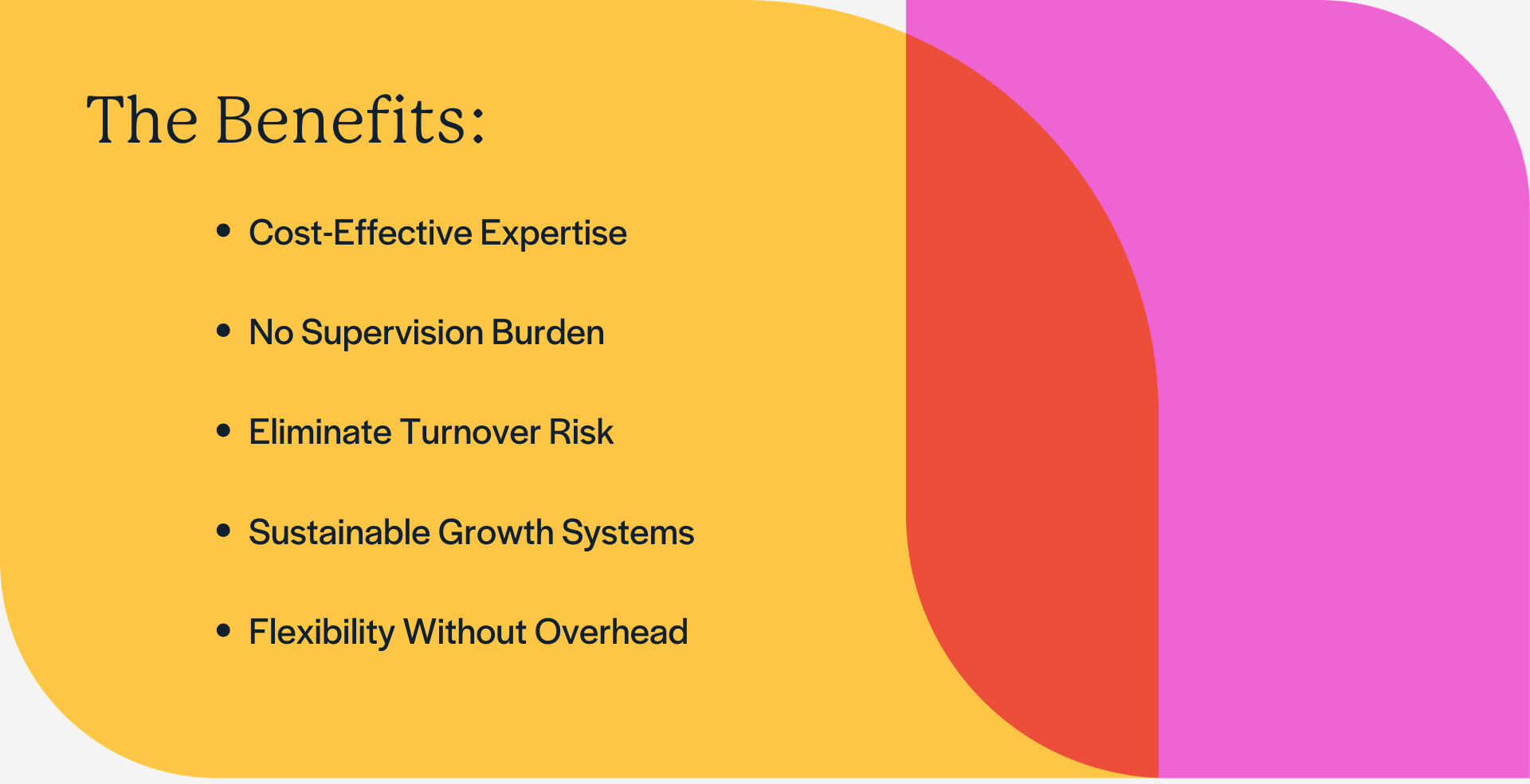
Cost-Effective Expertise
Get senior-level fundraising experience (8-15 years in our case) without the $60,000-$85,000+ salary, benefits, office space, and recruitment costs of a full-time hire.
Real numbers: A full-time experienced fundraiser costs $75,000+ annually plus benefits (typically 20-30% more). Fractional fundraising provides similar expertise for a fraction of that investment—typically 40-60% cost savings.
No Supervision Burden
Unlike hiring a junior fundraiser who needs constant guidance, a fractional fundraiser brings expertise that requires zero supervision. We know what to do and how to do it—freeing you to focus on programs and mission delivery.
Eliminate Turnover Risk
Staff turnover is devastating for donor relationships. Our agency model means your fundraising never stops, even if life circumstances change for individual team members. Continuity is built into the model.
Sustainable Growth Systems
We're not here to create dependency. We build systems, train your team, and establish best practices that continue serving your organization long after our partnership.
Flexibility Without Overhead
Your needs change throughout the year. Fractional fundraising adapts to seasonal demands—ramping up during campaign season, focusing on stewardship during quieter months—without rigid full-time constraints.
Is Your Organization Ready for Fractional Fundraising?
Fractional fundraising works best for small nonprofits that meet these criteria:
✅ You're a good fit if:
You have a clear mission and vision
You're committed to growing your fundraising program
The Executive Director is currently doing all the fundraising
You want professional expertise but can't justify a full-time hire
You value collaboration and partnership
You're ready for a 12+ month commitment (because sustainable fundraising takes time)
❌ You might not be ready if:
You're looking for quick fixes or overnight transformation
You want strategy only without implementation support
Your organization isn't ready to invest in long-term fundraising infrastructure
You need someone in the office full-time for visibility
Let's be real: if you're drowning in operational demands and fundraising keeps getting pushed to "next week," you're exactly who fractional fundraising was designed to serve.
Common Questions About Working with a Fractional Fundraiser
"Can someone who's not full-time really understand our organization?"
Absolutely. We prioritize an in-depth discovery phase where we learn the nuances of your organization, its history, culture, and mission. Our fundraisers are experienced ambassadors for your brand, trained to speak your language and connect with donors in meaningful ways.
We ensure alignment through regular feedback loops and collaboration with your team to maintain consistency in brand messaging. Plus, our outside perspective often helps us see past the clutter and give laser focus to what matters most.
"Will you be available for meetings and donor visits?"
Yes. While we work part-time hours, we schedule our time strategically around your needs—including donor meetings, board presentations, and key events. We coordinate calendars to ensure availability when it matters most.
"What if our needs change throughout the year?"
Flexibility is built into the model. We adjust our focus based on your seasonal demands—ramping up during year-end campaigns, focusing on grant writing in spring, emphasizing donor stewardship in summer. Your fractional fundraiser adapts to your evolving priorities and annual work plan.
"Why do you require 12-month contracts?"
Because fundraising takes time to build momentum. The 12-month structure protects your investment, not locks you in. It ensures we have enough runway to implement systems, cultivate donor relationships, and demonstrate measurable results.
Think of it like a flywheel: the first few months require effort to get moving, but as systems take hold and donors become engaged, fundraising becomes exponentially easier. Shorter engagements don't give us time to reach that compounding phase.
Payment structure: Our fee is a monthly retainer, so you don't pay for a whole year upfront—just predictable monthly payments that fit your budget.
Building Long-Term Fundraising Success
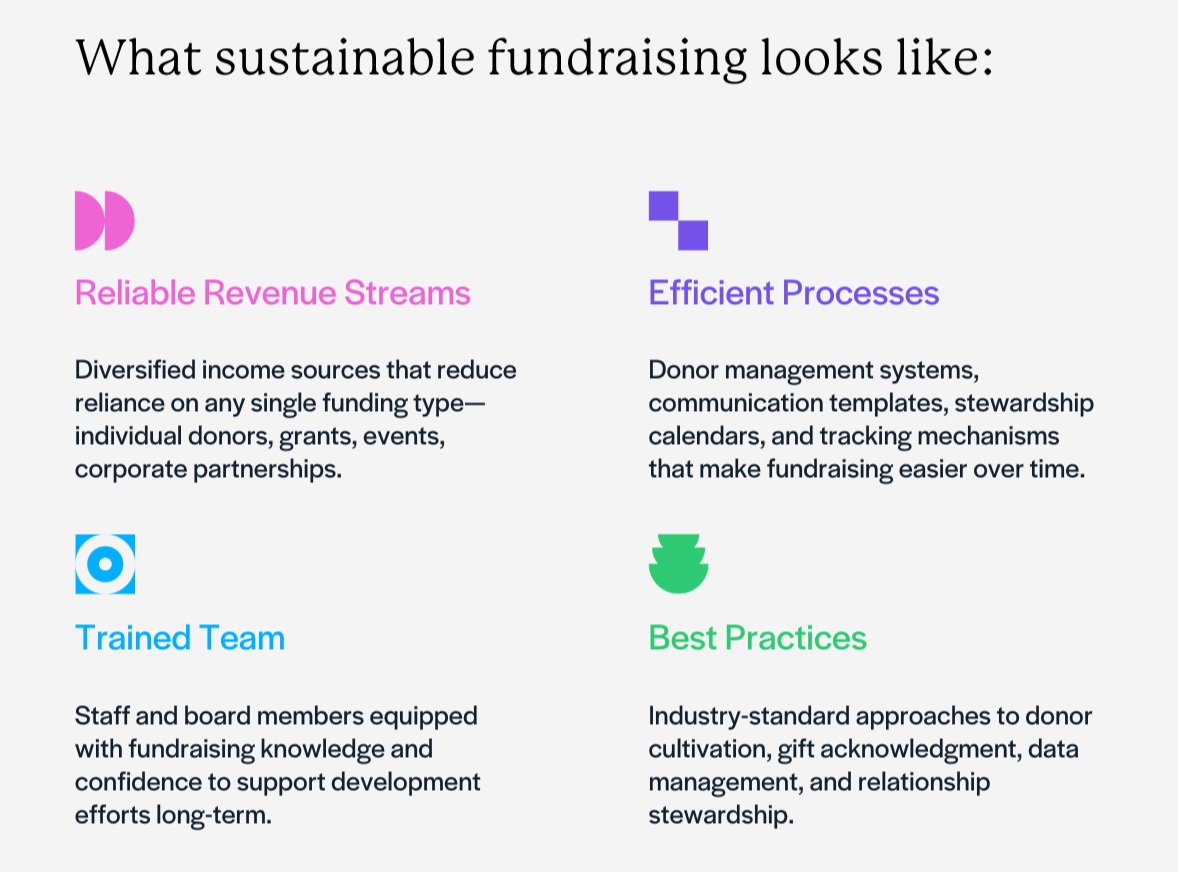
The goal of fractional fundraising isn't just to raise more money this year—it's to build sustainable fundraising programs that continue serving your organization well into the future.
Your community needs you present, not just productive. Fractional fundraising is about liberating you from the impossible choice between doing everything yourself or hiring expertise you can't afford.
Take the Next Step: Is Fractional Fundraising Right for You?
If your nonprofit needs fundraising expertise without the full-time cost—if you're tired of fundraising falling to the bottom of your to-do list—if you want someone who actually does the work instead of just telling you what to do—fractional fundraising could be exactly what you need.
Here's what happens next:
Schedule a discovery call to discuss your fundraising challenges and goals
Receive a customized proposal outlining scope, timeline, and investment
We match you with a SFS fundraiser that aligns with your needs and work style
Begin partnership with comprehensive discovery and strategic planning
I'd love to chat with you more about how this could work for your organization. Because you signed up to change lives, not chase donations.
Let's talk about building a fundraising program that finally takes this off your plate.

At Sound Fundraising Strategies, we respectfully acknowledge the sacred land where we work. Our headquarters are situated in Anishinaabek territory, as recognized in the Robinson-Huron Treaty of 1850 and the Williams Treaty of 1923. Indigenous peoples in the area, including Ojibway, Chippewa, Odawa, Pottawatomi, and Mohawk people from the Haudenosaunee Confederacy, have historical and ongoing connections to this land. Parry Sound is home to many diverse First Nations, Inuit, and Métis Peoples. Although our team is widely distrbuted, each member of our team is committed to learning and practicing respectful engagement with the land and its people.© 2026 Sound Fundraising Strategies. All rights reserved.